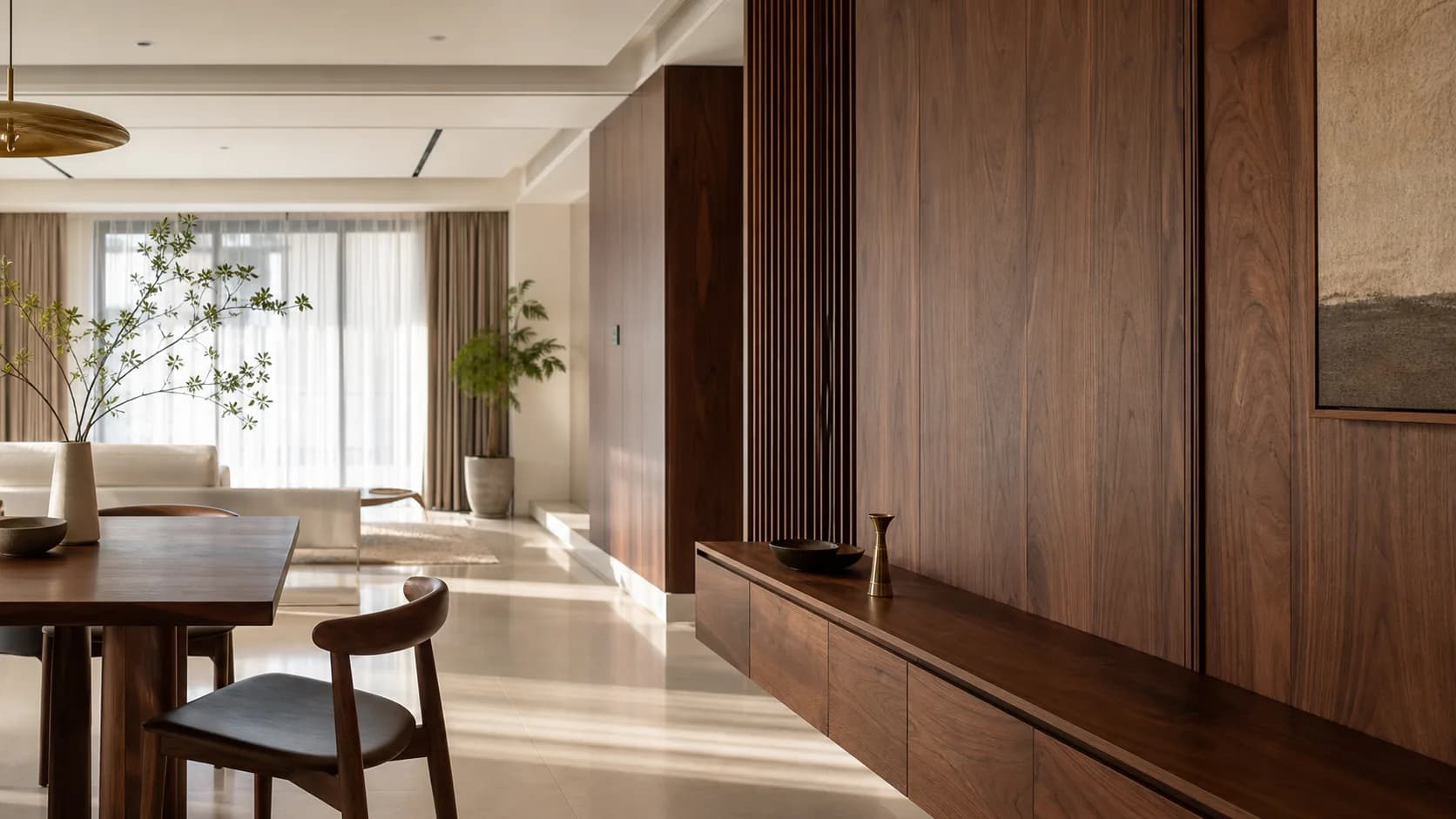
Overview
What is walnut wood?
The scope of the article focuses on North American black walnut, scientific name Juglans nigra.
Walnut is a trade name that can be used for many species of the genus Juglans. On this page, all statements about origin and material properties are limited to North American black walnut (Juglans nigra L.). Correct identification of the scope helps avoid equating North American walnut with European walnut or similarly named woods on the market.
This material is of interest in interiors thanks to its deep brown color, ability to create a deep surface finish, and wide range of applications. However, the species name does not automatically guarantee the quality of the finished product. A correct decision must still consider the raw material lot, sapwood and core wood, drying method, sawing method, product structure, coating and usage environment.
For the purposes of this article, “walnut” is used to refer to North American black walnut (Juglans nigra), and does not represent all species of the genus Juglans. Determining the correct scientific name and source of material records is an important step because color, structure and properties can vary by species, growing region and processing process.
Documents from the U.S. Forest Service describes black walnut as a type of wood that usually has a fairly straight grain, is easy to work with and is used for furniture, cabinets, veneers, decorative panels and interior finishes. These descriptions are a reference basis; The quality of a particular batch of wood still needs to be evaluated directly.

Origin
Origin and distribution area
According to U.S. Forest Service, black walnut is naturally distributed primarily in the central and eastern United States, extending into southern Ontario. Commercial wood may go through many stages of grading, drying and distribution before becoming a furniture material, so the country of sale name is no substitute for material source records.
When working with suppliers, you should ask for a clear enough description of the species name, material type, specifications, grade and drying status. If the project has specific requirements for traceability or certification, documents must be compared to the correct shipment rather than inferred from the name “imported walnuts”.
Origin
North America
Natural distribution
Naturally distributed mainly in the central and eastern United States, extending to southern Ontario, Canada.

Classification
Classification and types of common materials
In interior design, walnut wood often appears as solid wood, veneer covering the base material or details assembled according to a specific structure. These three concepts are not interchangeable: each has different advantages, limitations, testing methods and cost structures.
It is also necessary to distinguish the species name from the cut type or grain pattern name. Radial, tangential cutting or veneer placement can create very different surface images even within the same species. Therefore, material approval documents should include both technical descriptions and large enough surface samples.
Solid walnut wood
Used for details that need appropriate shaping or structure; Specifications, grafting plans and surface criteria must be clearly defined.
Walnut veneer
Thin layer of wood used on base material to create surface; need to check the type of substrate, veneer thickness and finishing system.
Divided by sawing and grain pattern
The way of sawing affects the visible grain. The trade name of the grain pattern needs to accompany the actual approval sample.
Identification
Color, wood grain and how to identify
Observations should be combined with material records; Don't conclude the species of wood just from a photo.
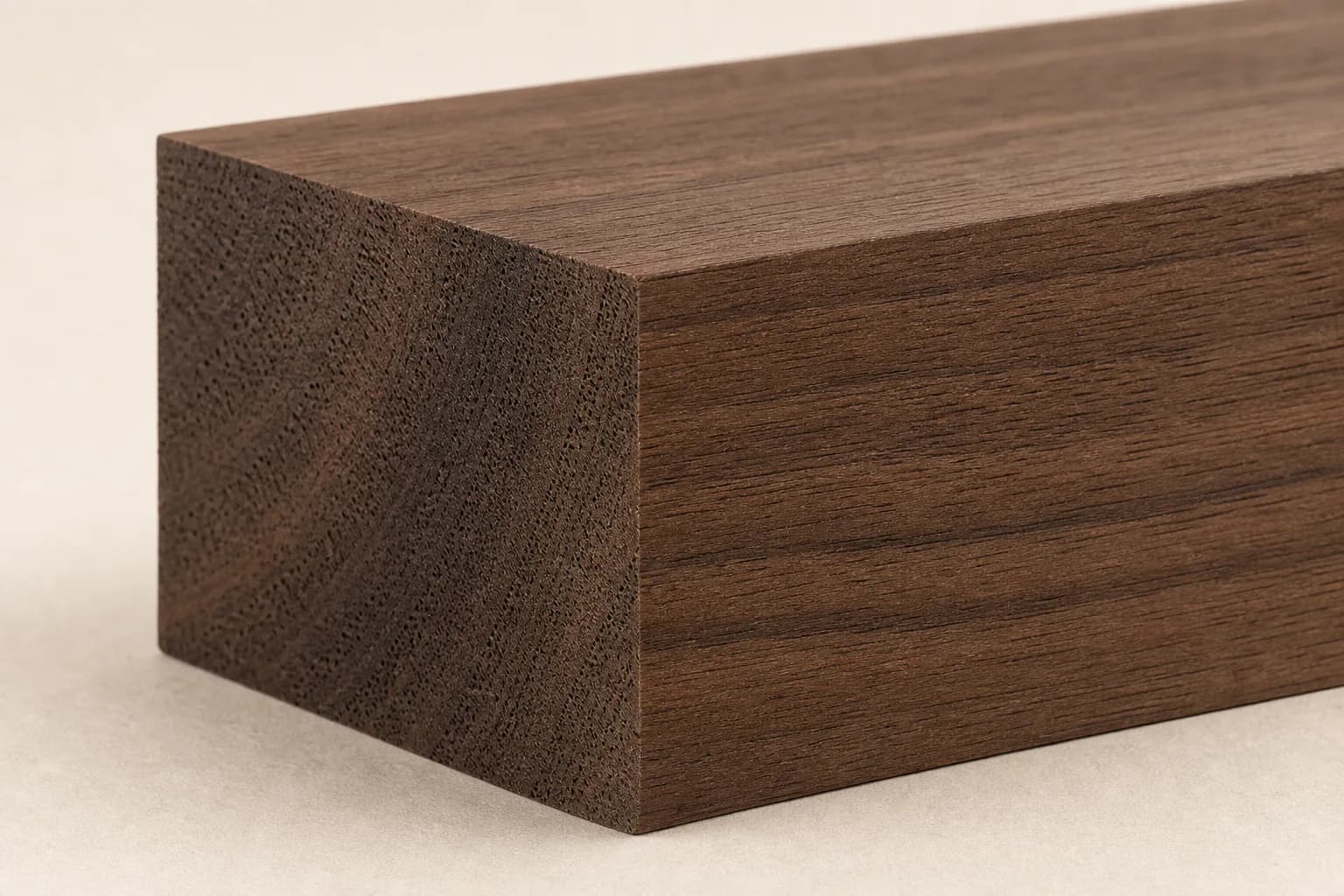
Black walnut heartwood typically ranges from light brown to dark brown, while sapwood can be very light. The observed color is also influenced by lighting, white balance when shooting, coating and time of use. One product image on the screen is therefore not enough to represent the entire batch of wood.
The veins are usually quite straight but may still have undulations, rolls or variations around the eyes and branches. The safe way to identify is to combine the scientific name, batch documents, real samples, and observe the wood surface and cross-section. The illustrations on this page only help readers understand where to observe and do not replace wood sample inspection services.
Confirm correct species
Require a sufficiently clear scientific name or commercial description; “walnut” can be used for many different species and sources.
Observe the heartwood and sapwood
Compare color ranges across multiple plates, noting that light-colored cupping may appear in the same lot.
Read patterns on a large enough area
Don't draw conclusions from a small patch or color-corrected image; The way of sawing can cause the grain pattern to change significantly.
Compare documents and real samples
Check product names, specifications, approval samples and documents applicable to specific batches of materials.
Material properties
Usage characteristics and machinability
Forest Service literature describes black walnut as a kiln-dried wood that holds its shape well after proper drying and has good machinability. This is a useful foundation for furniture, cabinets, veneers and finishes, but actual performance still depends on moisture content, grain direction, defects and machine quality.
Finishing can deepen the brown color and increase grain contrast. Before mass production, the intended oil, paint or coating system should be tested directly on a sample of the material batch itself. Swatch testing helps evaluate color, gloss, surface feel and repairability instead of relying on the trade name of the coating.
- Color
- The heartwood can range from light brown to dark brown; The sapwood part is usually bright, almost white. Actual color varies by tree, stem and surface finish.
- Wood grain
- The grain is usually quite straight but variable grain areas may appear. It is necessary to see a real sample large enough instead of judging from the color processed image.
- Hardness and bearing capacity
- USDA documents describe black walnut as heavy, hard, strong and impact-resistant wood. This site will not publish quantitative hard scores until the methodology and data sources are approved.
- Durability
- The heartwood is noted for its remarkable natural durability. Effective use still depends on design, environment, humidity and finish.
- Termites
- The name of the material should not be understood as a guarantee of termite immunity. Preventive measures must be based on construction conditions, material handling and instructions from specialized units.
- Humidity and stability
- Black walnut can be kiln dried and holds its shape well once properly dried. The stable quality of the finished product depends on the drying process, moisture balance and product structure.

Review
Advantages in interior applications
The notable advantage of walnut lies in its balance between visual expression and workability. The brown color helps the material create a highlight without needing many decorative details; The surface can be suitable for both minimalist shapes and products that need to emphasize handcrafted lines.
Aesthetic value is only promoted when the design controls wood proportions, grain direction, panel joining and lighting. Using too many dark surfaces in a small room can weigh the space down; On the contrary, combining it with a light background, neutral stone or natural fabric often helps the wood grain to be read more clearly.
Color and grain have depth
The brown color range of the core wood and the natural variation of the grain create a clear visual effect without the need for too much decoration.
Suitable for interior processing
USDA sources note that black walnut is easy to machine with tools and has good machining properties when the material is properly prepared.
Meets many finishing options
Surface can be finished to accentuate natural grain; Finished samples need to be approved on the wood lot used.
Wide range of interior applications
Can be used for loose furniture, cabinets, veneers, trim and suitable interior finishes.

Review
Limitations and points to note
The natural variation between sapwood, heartwood and each panel is a characteristic of the material and not always an error. However, if the project requires large, uniform surfaces, panel selection and grain joining can increase wastage, sample approval time and processing costs.
Natural wood still exchanges moisture with the environment. Wrong structural design, unbalanced materials, or large temperature and humidity changes can all lead to shrinkage, open joints, or deformation. The reputation of the wood species should not be used as an absolute guarantee against all conditions of use.
Absolutely not the same color
Sapwood, core wood and individual panels may vary in color. The project needs a sample approval and panel matching process instead of just relying on a reference photo.
Quality depends on drying and processing
Species names do not replace inspection of the product for moisture, defects, graft structure and conditions of use.
Difficult to compare prices if specifications are lacking
Quotes for lumber, veneer and finished products cannot be compared directly if the thickness, selection grade or scope of construction is different.
There is no absolute protection
Natural durability does not mean immunity to moisture, fungi or insects in all environments.
Application
Applications of walnut wood
In the interior, walnut wood can appear in tables, chairs, beds, cabinets, storage systems, wings, walls and decorative details. Choosing solid or veneer should start from the structure and conditions of use, and should not assume that every surface with visible wood grain must be made from solid wood.
In the living room and dining room, the table top or cabinetry is often the main viewing point. In the bedroom, brown can be used in moderation to create a warm feeling. For kitchens and areas at risk of water exposure, edge configuration, base material, finish and maintenance instructions are as important as the name of the wood.
There is no single occupancy rate for every space. Room size, amount of natural light, background color and wood surface area determine the final feel. Material samples should be viewed on site under both daylight and proposed lighting.
Furniture
Tables, cabinets, beds, shelves and loose products are designed to suit material characteristics.
Cabinets and storage systems
Application on the wing, frame or veneer layer depends on the structure and budget of the project.
Interior tiling and finishing
Veneer or wooden details can be used for wall panels, decorative systems and interior architectural accents.
Decorative details
Suitable for handrails, braces, table tops and details that need to show natural color and grain.
Living room
Suitable when warm brown tones and clear material accents are needed.
Bedroom
Can be used for beds, tables, cabinets or headboards with moderate proportions.
Working room
Often considered for desks, bookcases and interior finishing details.
Reception space
Can create accents for counters, cabinets or paneling under appropriate usage conditions.
Application gallery
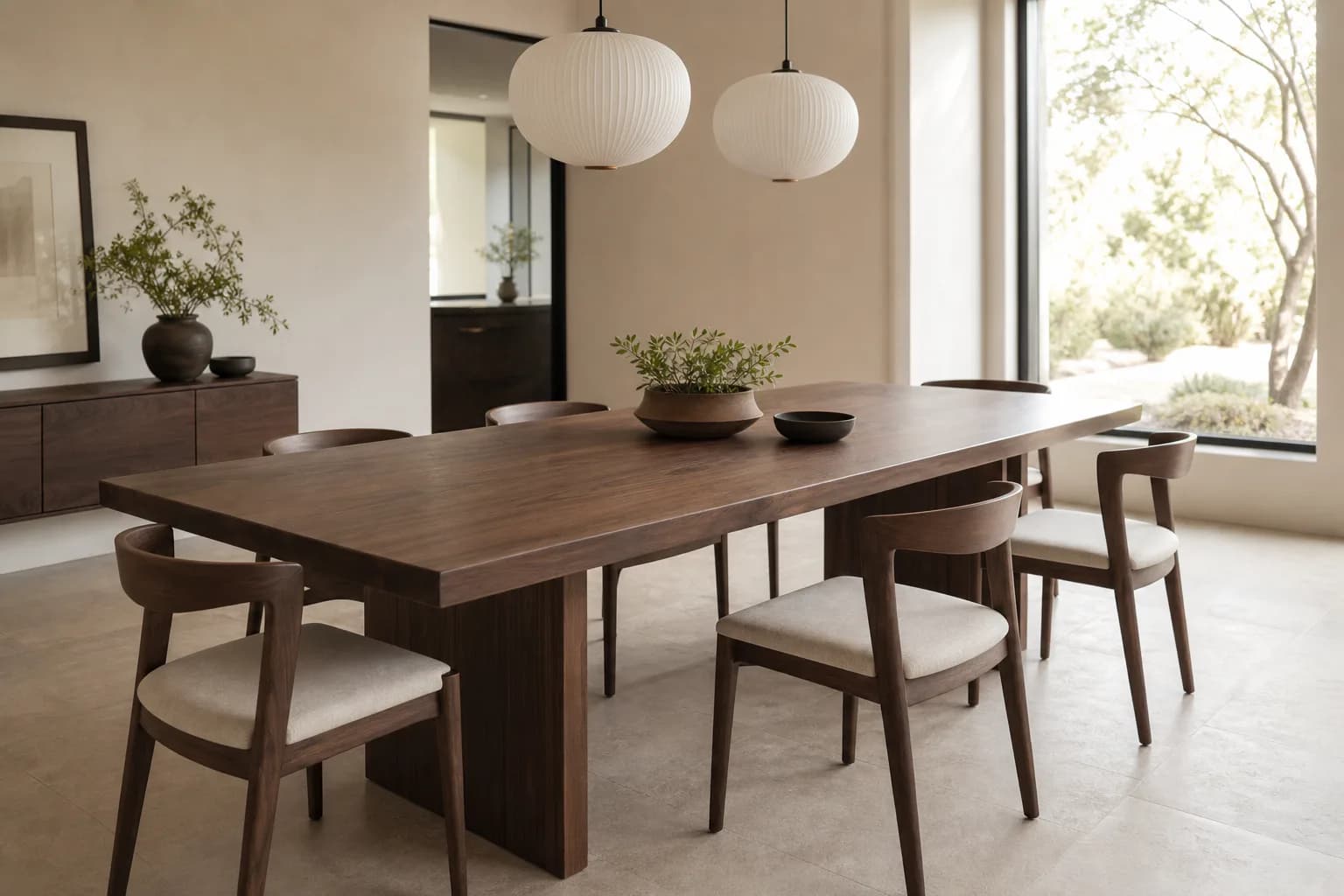
Application in dining room
The perspective illustrates AI, not the product or project GONOITHAT has constructed.
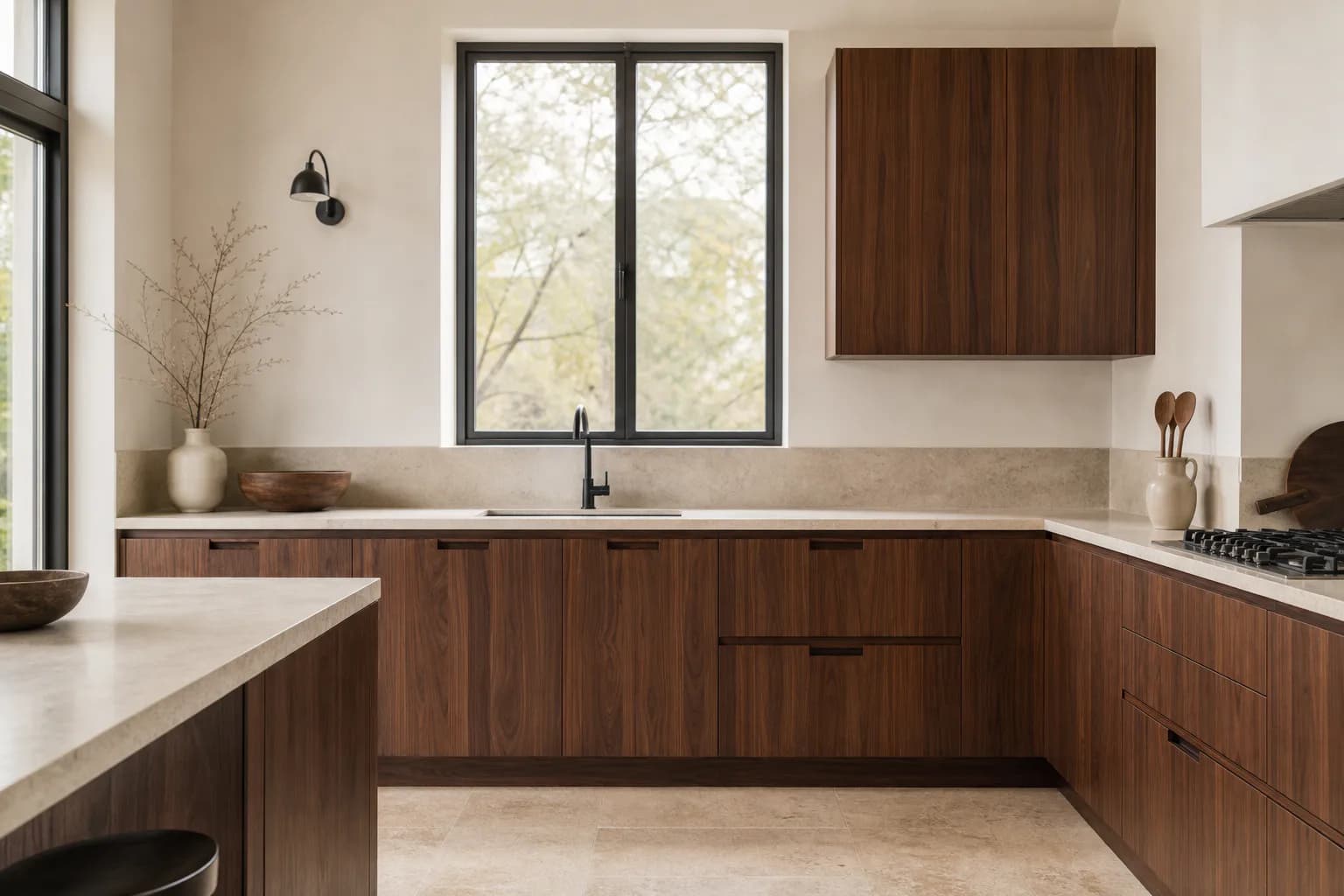
Application on cabinet systems
AI illustrative perspective, does not represent an actual project or specific product configuration.
Choose materials
How to choose and check quality
Choose according to usage needs, structure and real samples instead of just by trade name.
The first step is to properly describe the need: what product, what size, what type of surface will be affected, and how much color variation is acceptable. Then determine the material type, structure, specifications, selection level and finishing layer. This approach helps price quotes between suppliers have a basis for comparison.
When approving, it is necessary to simultaneously check the species name, moisture content according to the manufacturer's procedures, surface quality, defects, grain direction, joints, base material if using veneer and finished sample. Do not apply a general humidity number to all products without considering the environment and measurement method.
Selection guide
Product identification and conditions of use
Specify location, size, frequency of use, risk of water and sunlight exposure and maintenance requirements before choosing material type.
Choose texture instead of just choosing the name of the wood
Clarify which part is solid wood, which part is veneer or base material, joining method, accessories and finishing system.
Browse a large enough sample range
The sample should show an acceptable range of color and grain, including natural variation, rather than just one best piece.
Compare quotes on the same specifications
Compare species name, material type, size, selection grade, processing range, finish, transportation and installation.
Material checklist
Clearly state the name of the material in the quote
The trade name should be accompanied by the scientific name or description of the source when possible.
Request a moisture test
Results need to be evaluated according to the usage conditions and processes of the manufacturing unit, not applying a general number to all products.
Browse color samples and grain patterns
The approval sample should show the acceptable range of variation rather than a single beautiful image.
Check product structure
Distinguish between solid wood, veneer and base material; Confirm the composite structure, accessories and finishing layer.

Preservation
Instructions for use and storage
Daily care should prioritize minimal invasive methods: clean soft towels, treat liquids early and avoid rubbing agents. Suitable chemicals depend on the paint or oil system present on the product; A polyurethane coated product does not necessarily use the same process as a hard oil surface.
Prolonged sunlight, heat and humidity fluctuations can cause changes in color or surface condition. Curtains should be used when direct sunlight is strong, avoid placing them close to heat sources and maintain a stable usage environment to the extent possible. When restoration is needed, identify the old finish before sanding or applying additional coats.
Gently cleans
Use a soft, clean towel; Avoid rubbing materials that can damage the finish.
Treat fluids early
Dry any spilled liquids and follow the instructions of the finishing system in use.
Limit major environmental fluctuations
Avoid placing the product close to heat sources, prolonged humidity, or continuous strong sunlight.
Maintenance according to finish layer
Do not self-use chemicals with unknown compatibility; Ask the manufacturer before polishing or recoating.
Compare
Compare walnut with other types of wood
The table uses relative descriptions to support questioning; Not a quality chart.
Comparing materials only makes sense when the species range and conditions are clearly stated. The table below now contrasts black walnut with white oak according to the sources listed; Other woods should be enabled only after the editor adds the corresponding source profile.
Scroll horizontally to see the full comparison
| Criterion | North American black walnut | White oak |
|---|---|---|
| Typical color | Heartwood light brown to dark brown; light colored sapwood | Heartwood light brown to brown; need to confirm the correct species and sample |
| Pattern characteristics | Usually quite straight, may have variable grain areas | The pattern is clear; images vary by sawing and specific species |
| Relative hardness | Quite | High |
| Relative stability | Fair when properly dried and moisture balanced | Quite; still depends on drying, structure and environment |
| Machining ability | Good; Suitable for many interior processing operations | Quite; need a process that matches the grain direction and details |
| Storage requirements | According to the finish; Limit prolonged humidity and direct heat | According to the complete system and location of use of the product |
| Reference segment | High; Need to quote according to specification and selection level | Need to quote according to correct species, wood grade and specifications |
| Appropriate application | Furniture, cabinets, veneers, paneling and finishing details | Furniture, veneer, paneling, flooring and many wood items |
Comparison information is for reference only. Actual properties depend on raw material source, wood age, wood body part, drying process, surface finish and conditions of use.
Source transparency
References and editorial information
The content is compiled from documents of the U.S. Forest Service, Forest Products Laboratory and Purdue Extension. Sources are used to determine species range, distribution, color and grain characteristics, machinability and common applications; They do not replace specific batch testing of materials.
- 1.Black walnut (Juglans nigra), FPL Factsheet FS-270 — U.S. Forest Service, Forest Products Laboratory (1985)
- 2.Black Walnut — Silvics of North America — U.S. Forest Service (1990)
- 3.Hardwood Lumber and Veneer Series: Black Walnut — Purdue Extension (2012)
- 4.Oak (Quercus L.), FPL Factsheet FS-247 — U.S. Forest Service, Forest Products Laboratory (1985)
Answer